Discovering Yesta: The Casual Handwritten Font That Bridges Creativity and Communication
The landscape of digital typography is vast, offering tools for every conceivable purpose. Yet, within this array of precise geometric sans-serifs and structured serifs, there exists a special category of typefaces designed not for formality, but for feeling. Among these, the handwritten script font Yesta stands out, establishing itself as a bridge between the personal touch of analog creation and the efficiency of digital design. Its design philosophy centers on accessibility and warmth, making it a noteworthy asset for anyone aiming to infuse their work with a sense of approachable creativity.
Understanding the Handwritten Font Movement
The rise of casual script fonts like Yesta reflects a broader trend in visual communication. In an era dominated by sleek, minimalist interfaces, there is a counterbalancing desire for texture, personality, and human connection. Handwritten fonts serve this need by mimicking the irregularities and organic flow of pen-on-paper writing. They evoke familiarity, authenticity, and often, a light-hearted tone. Unlike formal calligraphic scripts which can feel ornate and distant, fonts in this casual genre prioritize friendliness and versatility. They are not simply decorative elements; they become active participants in setting the emotional tone of a message.
The Specific Character of Yesta
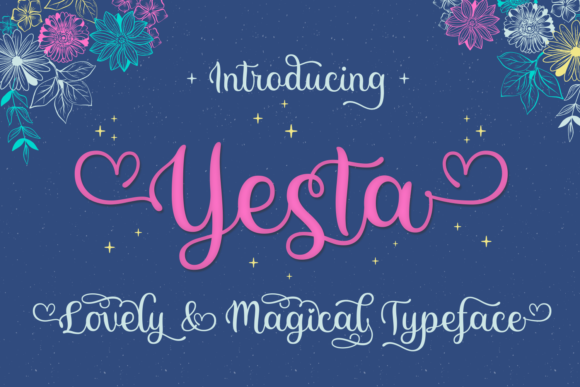
Yesta distinguishes itself within this movement through a carefully calibrated balance. Its core style is undeniably cute and casual, with letterforms that appear gently drawn, avoiding any harsh angles or rigid strokes. This foundational friendliness is what makes the font immediately engaging. However, Yesta’s true versatility emerges from its additional features: the gorgeous swashes and ligatures integrated into its design. Swashes are those elegant, flowing extensions on certain letters, often found on terminals or ascenders. Ligatures are special glyphs that combine two or more characters into a single, more harmonious form. These elements allow Yesta to transcend a basic "handwritten" look, offering users the ability to add moments of refined flourish without switching fonts or requiring expert-level typographic skill.
This combination means Yesta can oscillate between a simple, playful note and a more artistic, deliberate statement. The font carries an incredibly friendly feel not by being simplistic, but by being thoughtfully designed to feel effortless and inviting. It possesses a rhythmic consistency that ensures readability, while its varied glyphs prevent monotony. For the user, this translates to a font that feels both reliable and creatively stimulating.
Primary Applications and Real-World Use Cases
The practical utility of a font like Yesta is extensive, precisely because its personality is adaptable. Its applications span from purely personal projects to professional communications where a specific tone is desired.
- Social Media Graphics: When looking for fonts for Instagram, Pinterest, or other visual platforms, Yesta offers a solution. It excels in crafting quotes, promotional announcements for small businesses, event headers, or personal blog graphics. Its friendly feel aligns perfectly with the community-oriented, conversational nature of these spaces.
- DIY and Personal Projects: For hobbyists creating invitations, greeting cards, home decor signage, or scrapbook elements, Yesta acts as a digital calligraphy script. It provides the aesthetic of handcrafted lettering without the pressure of perfect penmanship, turning any creative idea into a polished piece of art.
- Educational and Informal Business Materials: Educators designing engaging worksheets, presentations, or classroom posters can use Yesta to make content feel more welcoming. Similarly, business owners in creative fields—such as boutique shops, cafes, independent consultants, or lifestyle brands—might use it in informal newsletters, website banners, or product labels to establish a warm, human brand voice alongside their more formal corporate typography.
- Digital Interfaces with a Personal Touch: In certain app designs, onboarding screens, or websites aiming for a less corporate, more guiding tone, selectively using Yesta for headings or key prompts can enhance user comfort and engagement.
Strategic Considerations for Deployment
While Yesta’s advantages are clear, effective use requires some consideration. Its primary strength is in setting a tone, so it should be employed where that tone—casual, friendly, creative—is appropriate. Overusing it in long bodies of text could compromise readability, as its stylized forms are best appreciated in shorter blocks like headings, pull-quotes, or labels. It is often most powerful when paired with a simpler, more neutral typeface for supporting text. This pairing creates a clear hierarchy: Yesta draws attention and conveys emotion, while the companion font ensures information is delivered clearly.
Another consideration is context. While Yesta is versatile, it may not suit highly technical, legal, or solemn communications where neutrality and authority are paramount. Recognizing its place is part of leveraging its value. Furthermore, accessibility should always be remembered; ensuring adequate color contrast and size when using any decorative font is crucial for inclusive design.
The Advantages Beyond Aesthetics
The benefits of integrating a font like Yesta into a creative or communicative workflow extend beyond simply making things look nice.
- Emotional Resonance: Typography is a subtle but powerful tool for emotional signaling. Yesta can quickly instill a sense of approachability, warmth, and creativity, helping to shape the user’s or reader’s perception before they even engage with the content’s substance.
- Brand Differentiation: For small businesses or individual creators, using a distinctive, personality-driven font like Yesta can help carve out a unique visual identity in a crowded market. It becomes a recognizable part of their brand’s voice.
- Creative Efficiency: For those without the time or skill to create custom hand-lettering, Yesta provides a high-quality alternative. Its included swashes and ligatures offer built-in "customization" options, allowing for elevated designs without additional graphic manipulation.
- Versatility Across Media: As a digital font, Yesta maintains consistency across print and digital outputs. The same project file can output a social media graphic and a printed poster, ensuring the brand or project feel is unified.
Observing Trends and User Adoption
The adoption of fonts like Yesta is observable across digital culture. From the surge in "cottagecore" aesthetics and personalized online shops to the emphasis on authentic connection in marketing, visual tools that facilitate a human touch are increasingly valued. Users are not just selecting fonts for legibility; they are selecting them for emotional utility. Yesta sits comfortably in this niche, serving both professional designers seeking a specific tool and non-designers seeking an accessible way to elevate their projects. Its design avoids being overly trendy or niche, leaning instead on timeless principles of friendly, legible handwriting, which suggests it will retain its utility beyond fleeting design fashions.
In practical observation, the font’s performance hinges on its application. When used as a deliberate accent—for a logo word, a key headline, a special offer tag—it delivers its intended effect powerfully. When overapplied or used in incongruent contexts, its effect can diminish. This underlines an important principle in typography: the most effective fonts are those used with intentionality and strategic restraint.
Final Thoughts on Implementation
Integrating Yesta, or any personality-driven font, into a workflow begins with understanding the project’s communicative goals. Is the intent to inform formally, to inspire creatively, or to connect personally? If the goal leans toward the latter two, Yesta becomes a viable candidate. The next step is technical: ensuring the font files are properly licensed and installed for the intended use, whether in a desktop design application like Adobe Creative Suite, a web project via CSS, or a cloud-based platform like Canva.
Experimenting with its special features—actively using the swashes and ligatures instead of just the base characters—is key to unlocking its full potential. Many users of casual script fonts only use the standard glyph set, missing the opportunity for that extra layer of artistic detail that fonts like Yesta provide. Finally, as emphasized, pairing is paramount. Selecting a complementary sans-serif or simple serif to handle paragraphs, captions, and data ensures that the charm of Yesta enhances the work without undermining its clarity and function.
In essence, Yesta represents more than just a set of letter shapes. It represents a tool for humanizing digital communication. It provides a path for professionals, creators, educators, and business owners to inject a note of genuine, approachable personality into their work, bridging the gap between the polished world of digital design and the warm, imperfect world of human expression. Its value lies not in being the only solution, but in being a particularly accessible and versatile one for those moments where a friendly feel is precisely what the project needs to turn a creative idea into a resonant piece of art.