Audacty: The Handwritten Font That Feels Like a Friend
In the digital landscape, where sleek sans-serifs and rigid geometric typefaces often dominate, a font that brings a sense of warmth and personality can be a revelation. Audacty emerges not just as a typeface, but as a design tool that injects genuine human touch into projects. It is a casual handwritten script font defined by its incredibly friendly feel. This characteristic is its core identity, moving beyond mere visual style to evoke an emotional response from the viewer.
The Anatomy of Friendliness in Typography
What exactly makes a font feel friendly? It's a combination of visual cues that subconsciously signal approachability and authenticity. Audacty achieves this through its fundamental design principles. The letterforms possess a natural, uneven flow reminiscent of actual handwriting, avoiding the cold precision of perfect circles and straight lines. The baseline is subtly irregular, and the stroke weights have a gentle variation, mimicking the pressure of a pen on paper. This creates an immediate sense of familiarity and comfort, as if the text is a personal note rather than a corporate statement.
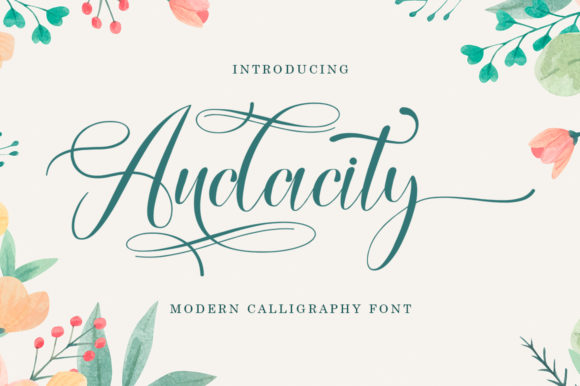
Beyond its base casual style, Audacty is equipped with gorgeous swashes and ligatures. These are not mere decorative extras; they are integral to the font's versatility. Swashes—those elegant, extended strokes on certain letters—allow for dramatic flourishes that can elevate a single word into a focal point. Ligatures, where two or more characters blend into a single, unique glyph, solve common spacing issues in scripts and add a layer of sophisticated craftsmanship. Together, these features prevent the font from feeling monotonous and provide creators with tools to modulate tone, from playful to elegant, within the same type family.
Unlocking Creativity with PUA Encoding
A significant technical feature that empowers users is Audacty's PUA encoding. Private Use Areas are reserved code points in a font that allow for extra characters not found in standard Unicode. For a font like Audacty, packed with alternate glyphs and swashes, this is crucial. It means every cute glyph and decorative swash is accessible directly and easily through most design software. Instead of requiring complex workflows or separate font files for alternates, users can typically access these special characters via a glyph panel or by using specific keyboard combinations. This removes a major technical barrier, letting designers focus on creativity rather than software hurdles.
The wealth of special features, including a variety of alternate glyphs for common letters, means you can customize the look of a word or paragraph extensively. You might choose a standard 'a' for a clean look, or swap it for an alternate with a tail for a more ornate feel. This level of control ensures that text set in Audacty never looks generic; it can be tailored to match the precise mood of the project.
Real-World Applications: From Social Media to Sole Proprietors
The practical applications for a font like Audacty are vast, crossing over professional, creative, and personal domains. Its primary strength is in projects where communication needs to feel direct, warm, and engaging.
For social media creators, looking for fonts for Instagram, Audacty presents a powerful tool. In a platform driven by personal connection and aesthetic appeal, this font can transform captions, story text, and promotional graphics. It makes brand communication feel less like broadcasting and more like conversing. A small business owner using Instagram can craft posts that resonate with authenticity, their quotes and announcements carrying the weight of a handwritten recommendation.
In the realm of DIY projects and personal creativity, Audacty serves as a premier calligraphy script for digital crafts. Whether designing custom invitations, wedding signage, quote art for home decor, or personalized logos for a hobby venture, the font provides the polished look of hand-lettering without requiring mastery of physical penmanship. It turns digital creative ideas into pieces of art that retain a handmade soul. Educators might use it to create more engaging worksheets or presentation materials that feel welcoming to students, while researchers could employ it in informal presentations or community outreach materials to soften the delivery of complex information.
Integrating Audacty into Professional Workflows
For professional designers and marketers, incorporating Audacty requires thoughtful consideration. Its casual nature means it is not a universal replacement for body text in formal reports or lengthy documents. However, it excels as a display font for headlines, logos, pull quotes, and key callouts. In branding, it can be perfect for companies whose ethos revolves around craftsmanship, personal service, or artistic quality—think boutique brands, artisan food producers, independent authors, or creative agencies.
A workflow might involve using Audacty for a main logo lockup, employing its standard letters for clarity and its swashes for a distinctive flourish. Then, for marketing materials, the same font could be used for heading text on websites, banner ads, and packaging taglines. The key is consistency in application and pairing it with a more neutral sans-serif or serif font for supporting text to ensure readability and balance. This combination allows the friendly character of Audacty to shine without overwhelming the entire design system.
Observations on Versatility and Tone
Versatility in a script font is often misunderstood. It isn't about being suitable for every context, but about having a range of expression within its defined style. Audacty demonstrates this beautifully. Using its standard character set yields a clean, approachable handwritten look suitable for everyday communication. Activating its swashes and selecting more ornate alternate glyphs shifts the tone toward celebration and elegance, ideal for special events or luxury branding. This internal range makes it a more valuable asset than a script font with only one rigid style.
An important observation is that the "cute" descriptor, often associated with Audacty, should not limit its perceived utility. "Cute" here relates to its charming and pleasing details, like the gentle curves and playful alternates. This does not confine it to childish or frivolous projects. When used with intention, it can convey sophistication, as many high-end brands utilize handwritten-style logos to imply exclusivity and personal attention. The emotional resonance is the key; it makes the audience feel cared for.
Considerations for Effective Use
To maximize the impact of Audacty, several technical and aesthetic considerations are worth noting. Legibility remains paramount. While its casual form is highly readable at larger display sizes, overuse in dense paragraphs or at very small sizes can challenge readers. It is best employed where it can breathe—in headlines, short phrases, and emphasized text.
Pairing is another critical consideration. The font pairs exceptionally well with simple, neutral typefaces. A clean sans-serif like a geometric or humanist style provides a stable foundation that lets the personality of Audacty stand out without creating visual chaos. Color choice also interacts strongly with the font; softer, warmer palettes often enhance its friendly feel, while bold, contrasting colors can make it appear more energetic and modern.
Finally, understanding your software's method for accessing the PUA-encoded glyphs is a practical step. Most advanced design applications like Adobe Illustrator or Photoshop have a Glyphs panel where you can visually select alternates and swashes. In some word processing or simpler design tools, you might need to refer to a character map or use specific font styles provided within the family. Investing a few minutes to learn this access ensures you can fully leverage the font's artistic potential.
The Enduring Value of Human Touch in Design
In an era of automated communication and standardized interfaces, the desire for human connection persists. Typography that evokes this connection holds significant value. Audacty, as a handwritten font, fulfills this role not by pretending to be actual handwriting, but by capturing its essence in a scalable, accessible digital tool. Its friendly feel is a design feature with psychological impact, making messages appear more trustworthy, more personal, and more engaging.
From the professional designer crafting a brand for a local cafe to the hobbyist making a birthday card, the font offers a bridge between digital efficiency and analog warmth. Its technical construction, through PUA encoding and a wealth of features, respects the user's need for creative control without complexity. Whether the goal is to enhance social media engagement, elevate a DIY project, or soften the voice of a professional communication, Audacty provides the stylistic toolkit to achieve it. In the end, it reminds us that in a world of pixels, the impression of a personal touch can still be the most powerful element of design.