Hello Butterfly: An Analysis of a Modern Script Font
In the realm of digital typography, script fonts occupy a unique niche. They evoke personality, elegance, and a human touch that stark geometric typefaces often cannot. Hello Butterfly is a contemporary script font that enters this space with a specific aesthetic proposition. It is not a historic calligraphic reproduction nor a casual handwritten scrawl; it presents itself as a balanced, designed script with a clear modern sensibility. This analysis examines its characteristics, practical applications, and overall value for creative professionals.
Evaluating Design Characteristics and Tone
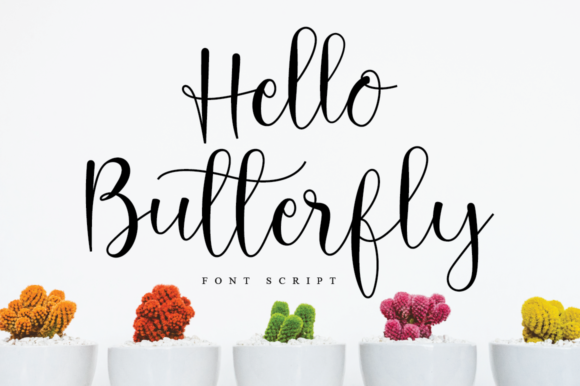
The primary worth of Hello Butterfly lies in its crafted appearance. The font displays a consistent baseline with moderate letterform variation, creating rhythm without chaos. Its strokes are clean, with deliberate thick-and-thin contrasts that are subtle rather than dramatic. This results in a classy and elegant look, as often described, but it’s perhaps more accurately defined as polished. The 'modern' attribute is key; it lacks the ornate flourishes of vintage scripts, offering a cleaner, more structured feel that aligns with current minimalist and hybrid design trends.
Legibility is a crucial test for any script font. Hello Butterfly performs adequately here. Letter connections are logical, and character differentiation is maintained. It is readable at medium sizes for phrases and short blocks of text, though it is naturally not suited for extended body copy. This balance between stylistic flair and functional clarity is one of its core strengths.
Practical Applications and Real-World Performance
The suggested uses—logos, branding, invitations, stationery, wedding designs, social media—are appropriate. Hello Butterfly can serve as a primary brand mark for businesses seeking a soft, artistic identity, such as boutique shops, beauty brands, or creative studios. Its reliability across mediums is important; a font must render consistently from print to pixel. As a digital font file, its performance depends on proper embedding and rendering engines, but its straightforward design suggests few technical pitfalls.
Strengths in Specific Contexts
- Logos & Branding: It offers a singular voice. A logo using Hello Butterfly immediately communicates artistry and refinement. Its consistency ensures the mark remains recognizable at small sizes.
- Event Design: For weddings, anniversaries, or formal invitations, the font’s elegant look aligns perfectly with the tone. It elevates standard text without overpowering the layout.
- Digital Social Graphics: In social media posts or web banners, it can create focal points for headlines or quotes, adding visual interest against simpler backgrounds or photography.
Considerations for Professional Use
Usability extends beyond aesthetics. Does the font integrate smoothly into a professional workflow? For users of common design software, Hello Butterfly would function as any standard typeface. Its flexibility is moderate; it is a single-weight script, not a family with light, regular, and bold variants. This limits typographic hierarchy options within the same font. You cannot achieve contrast using only Hello Butterfly; you must pair it with other typefaces for body text or supporting information.
Long-term value is tied to trend resilience. While currently modern, script styles can cycle. However, Hello Butterfly's restrained design may avoid appearing overly trendy, offering a longer shelf-life than more extreme stylistic choices. Its effectiveness hinges on correct application. Overuse, or pairing it with incompatible fonts, would diminish its impact.
Potential Limitations
- It is a stylistic specialty font, not a versatile workhorse for all text needs.
- The absence of a weight family restricts in-font contrast possibilities.
- Its tone may be too soft or artistic for corporate, technical, or masculine-branded projects.
- Performance in very long text blocks would be poor due to readability and visual fatigue.
Who Benefits Most from Hello Butterfly?
The audience fit aligns with the creators and business owners described. Entrepreneurs in lifestyle, creative, or personal-service sectors can find a ready-made brand voice. Marketers designing campaigns for similar audiences can use it for key visual elements. Freelancers in design or content creation can add it to their asset library for client projects requiring that specific tone. Bloggers and publishers might employ it for site logos or featured post titles. For educators or serious hobbyists, it’s a viable choice for personal projects, invitations, or artwork where a polished handwritten look is desired.
The font is less suitable for projects requiring high formality (legal documents), stark minimalism (ultra-modern tech), or broad multilingual support without testing. It fits projects where emotional resonance and aesthetic appeal are primary goals.
In summary, Hello Butterfly is a valuable tool within its defined scope. It provides a reliable, modern script option that balances style with legibility. Its worth is not universal but situational. For professionals and creators whose projects demand a touch of elegant artistry, it can be an effective and practical choice. Evaluating it against your specific project needs—the required tone, the audience expectations, and the technical context—will determine if it is the right fit for your workflow and goals. A font is a foundational design decision; Hello Butterfly offers a clear and competent solution for a particular set of design problems.